Climate, cost, and the collapse of care
Zainab Farooqui reviews Sarah Marie Wiebe’s book, Hot Mess: Mothering through a Code Red Climate Emergency, and its exploration of care, resilience, and survival within an age of overlapping crises.
Image: Magnific
As many CRJ readers may already be aware of, the state of the world today remains rather bleak. In between conflict, instability, rising costs of living, energy crises, and climate emergencies, an average individual is more often concerned with the task of surviving until the next week than with what the world may look like in the next ten years.
This presents a difficult challenge when communicating regarding the climate. While statistics surrounding rising global temperatures, emission targets, and weather forecasting of natural hazards may be important, they often overload audiences, and result in disengagement. A recent blog by George Buchan for CRJ explores this very issue of how the cost-of-living pressures may ultimately eclipse climate worries for many, noting: “Climate change is seen as a distant issue. Sometimes literally – in other parts of the world – and sometimes temporally – an issue for the future, not today.”
But, it doesn’t simply stop there: the very overload that deprioritises climate issues results in what is known as the ‘crisis of care’. In CRJ 21:1, Andy Blackwell looks at the cost-of-living crisis and its effect on people who staff critical services and infrastructure, stating: “When a significant portion of a country's population is living in chronic precarity, the shock absorber is already weakened before a crisis occurs.” This includes informal networks which provide immediate, practical support long before formal procedures fully mobilise.
How can one truly blame them for having such a perception? If people are struggling to afford food, pay bills, or raise children, how are they expected to care for a planet that increasingly feels beyond saving?
It’s precisely this tension that Sarah Marie Wiebe’s book, Hot Mess: Mothering through a Code Red Climate Emergency, explores. Rather than approaching the climate crisis through policy discussions or scientific jargon to create a frenzy, what she does is ground her issue in something far more immediate and relevant for many: care.
Wiebe’s first chapter begins with a simple sentence: “Pregnant in the first trimester, I struggled to breathe”, before moving into her experience of the 2021 heat dome in British Columbia, Canada, one of the deadliest weather events in the province’s history, which claimed the lives of 619 individuals. What she describes, thereafter, is simple: an account of what it’s like to live through overlapping emergencies, while attempting to care for and worry for both herself and her unborn child.
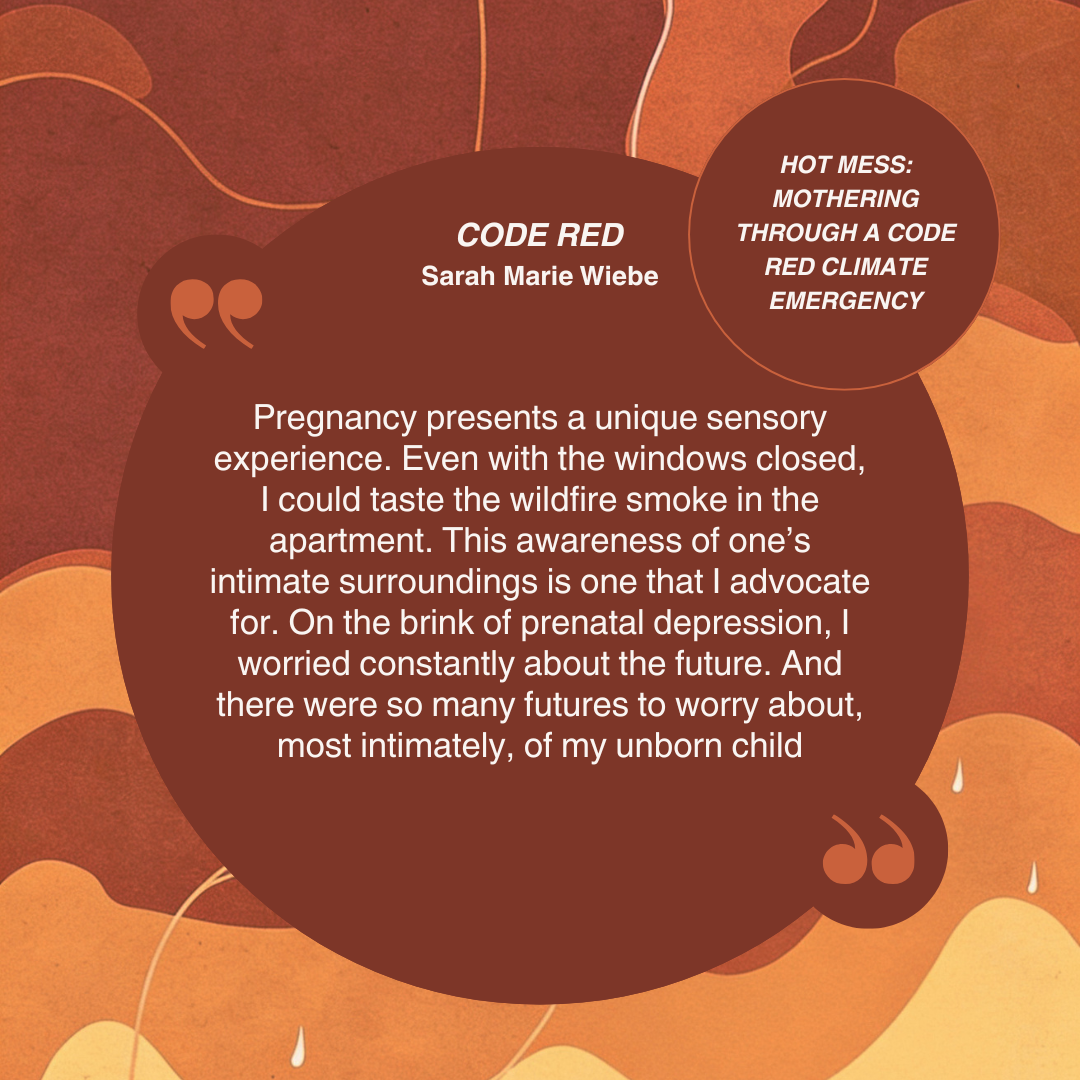
Here, the strength of the book is ultimately unveiled: Wiebe does not attempt to separate the climate hazard from ordinary life; rather, climate anxiety becomes intertwined with exhaustion, motherhood, recovery, fear, and the difficult nature of ‘care’ itself – something that the use of the phrase ‘Hot Mess’ in the title captures.
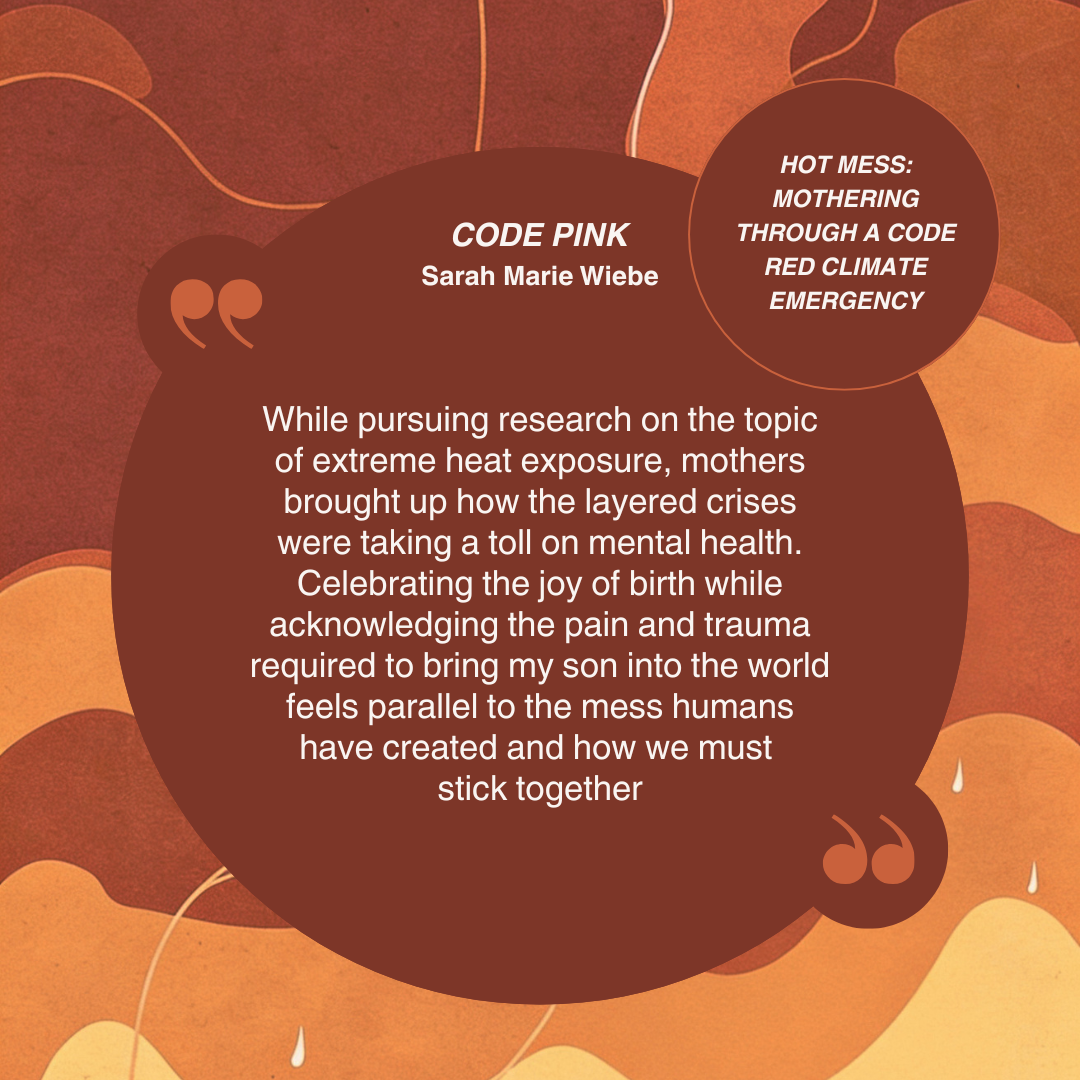
What she introduces is perhaps central to the book: the idea that care itself has become a crisis. She reflects on her own experience navigating inadequate care infrastructure.
Yet, for Wiebe, care isn’t simply kindness or empathy; it is the radical intervention that sustains communities. The care – as she echoes throughout the book – includes the grief of processing climate hazards; the ways communities shared resources and provided support during the heat dome; the lack of existing preparedness and knowledge surrounding health and climate emergencies; and how the pain of such events is viscerally felt in our bodies.
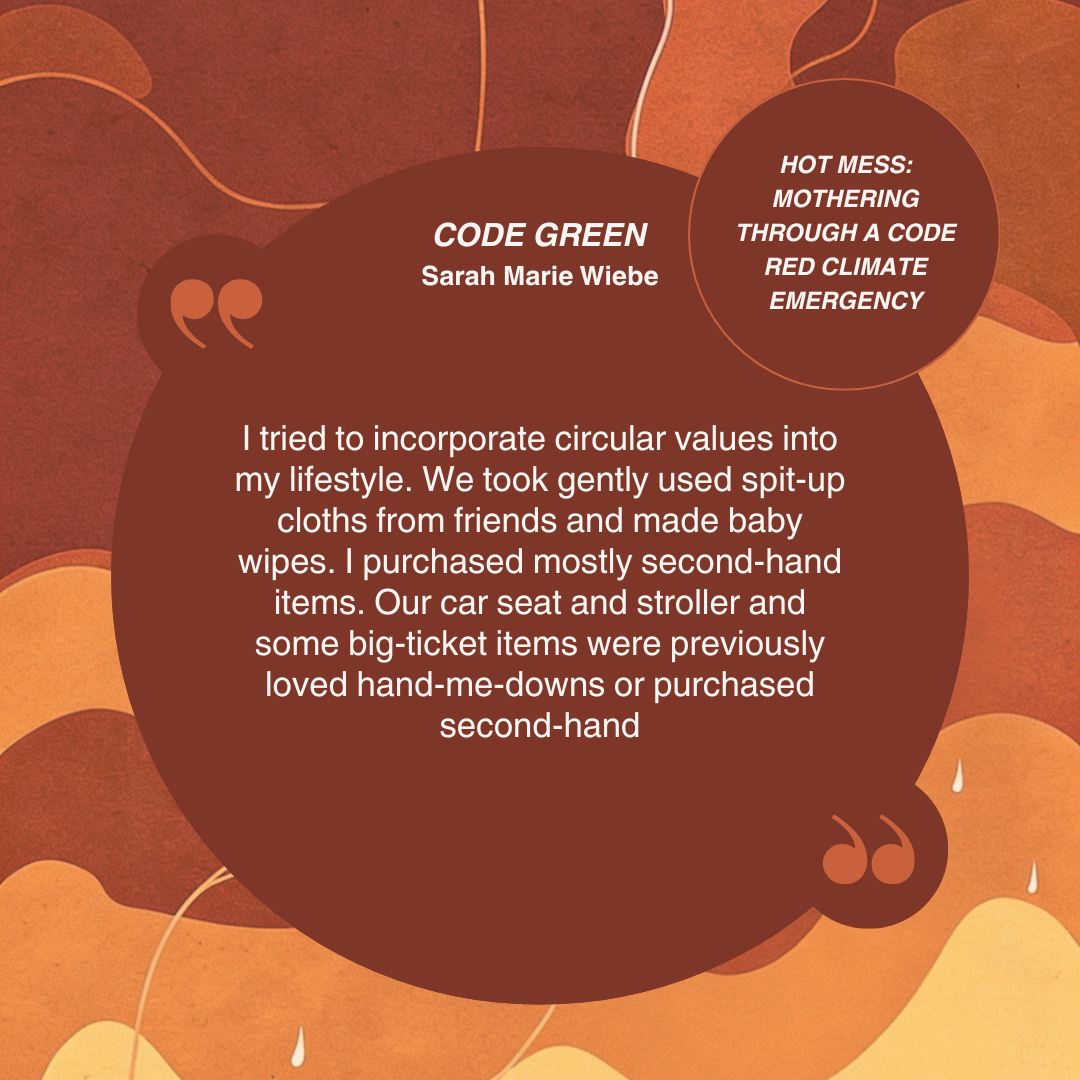
For Wiebe, capitalist values associated with the dominance of human activity over nature need to change; instead, what we need is a ‘caring economy’ or a ‘regenerative economy’ that allows for meaningful work for all. She reminisces about her own attempts at adopting a circular economy as a mother.
As Wiebe mentions, the question defining the book was: “How do we care for each other to live well on this planet, and nurture the conditions for life to flourish when exceptional emergency events become the norm?” And, it achieves exactly that by providing a plethora of examples showing how care can be included within our social, political, and communal lives, while showing that our responsibility to care for one another cannot begin and end only during moments of crisis.
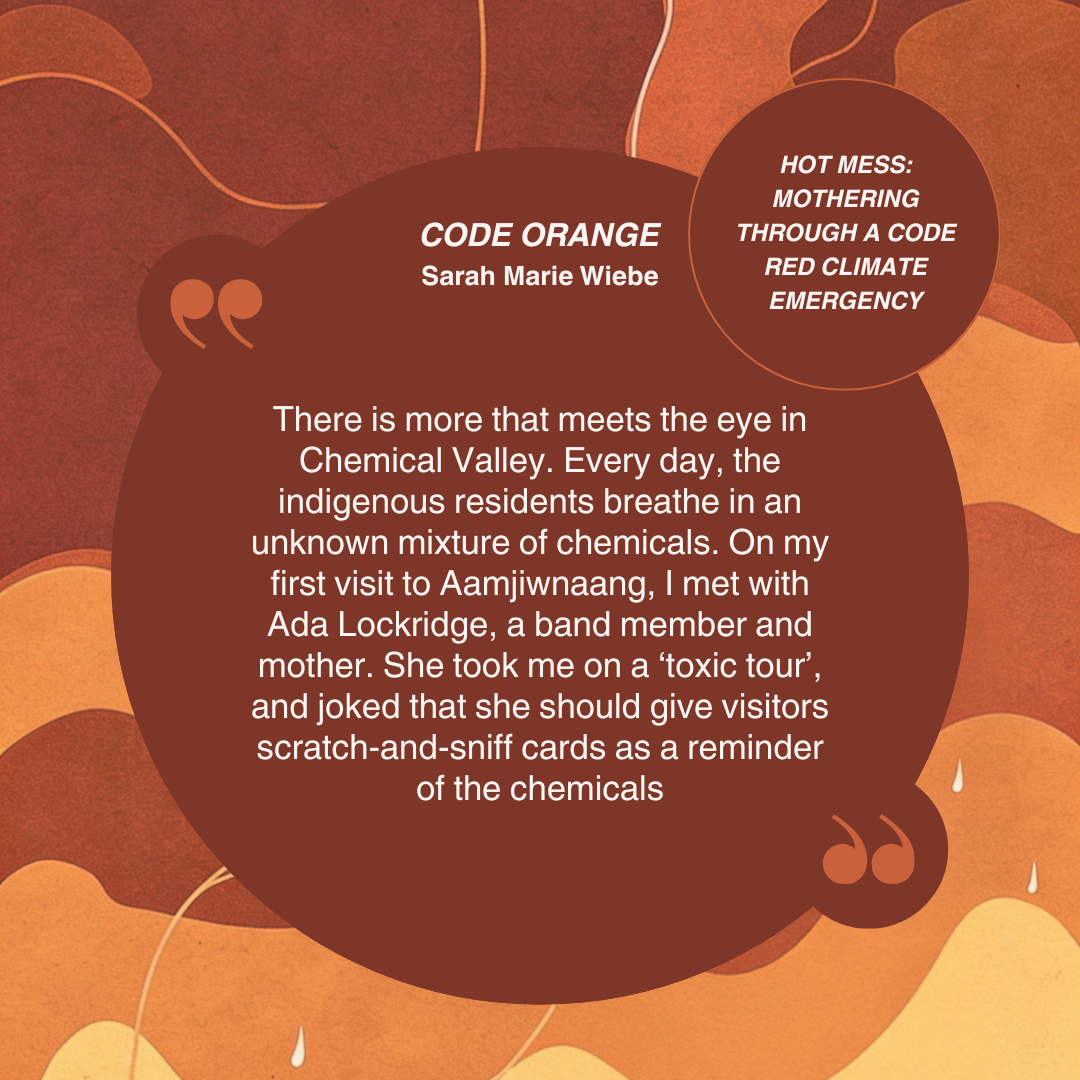
She expands this perspective beyond her own experiences by shifting focus toward other communities as well, particularly the Aamjiwnaang population living in Canada’s Chemical Valley, a 15-mile industrial corridor in Sarnia, Ontario, that houses over 60 petrochemical plants and oil refineries.
In doing so, what the book does wonderfully is to reframe resilience as a shift away from the highly individualised, extractive social order we currently reside in – one where overload results in disengagement. Rather, Wiebe exposes the systems that exhaust communities to the point where long-term crises become difficult to emotionally or materially engage with, all through her own experience of a climate emergency.
Zainab Farooqui is a journalist based in Karachi, Pakistan. She is the Digital Editor for the Crisis Response Journal and is a part of the Editorial Team.